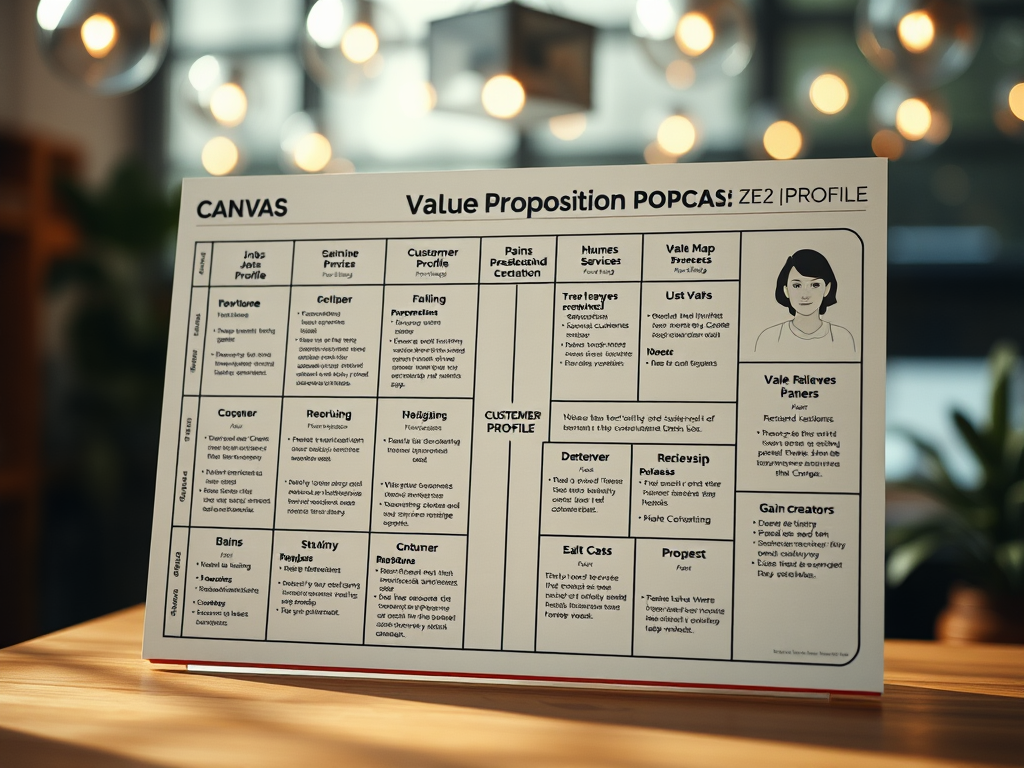
The Value Proposition Canvas (VPC) is a tool designed to help ensure that a product or service is aligned with what customers value and need. It was initially developed as a framework to guarantee that there is a strong fit between the product and the market.
It (VPC) originated from the Business Model Canvas (BMC), conceptualized by Alexander Osterwalder and Yves Pigneur. Refer to the picture below. You get the Value Proposition Canvas when you link the BMC’s Value Propositions and Customer Segments.
Value Propositions — Describes the bundle of products and services that create value for a specific customer segment. It covers product features that will address customer pain points.
Customer Segments — As the name suggests, the different groups of people or organisations that your product aims to reach and serve. You may wish to distinguish between niche and mass customer segments.

Here is a template of the value proposition canvas.

Components of a Value Proposition Canvas
It consists of two main parts:
1. Customer Profile (On Right)
- Customer Jobs: These are the tasks, problems, or needs the customer wants to address. Jobs can be functional (e.g., mowing the lawn, listening to music on the go), social (e.g., looking good in front of friends), or emotional (e.g., feeling secure).
- Pains: These are the negative experiences, emotions, or risks that the customer encounters while trying to get the job done.
- Gains are the benefits or positive outcomes that the customer expects or desires from the job.
2. Value Map (On Left)
- Products and Services: These are the offerings or product features that your business provides to help customers get their jobs done (e.g., driver or restaurant ratings, one-click checkout option).
- Pain Relievers: These describe how your products and services alleviate customer pains (e.g., Ride-hailing services provide an ETA for drivers, giving riders peace of mind.)
- Gain Creators describe how your products and services create customer gains (e.g., A networking event creates new business connections).
The goal is to achieve a “fit” between the Customer Profile and the Value Map, meaning that your products and services address the most important customer jobs, pains, and gains.
Benefits of using VPC
Customer focus: The main benefit is understanding the existing customer jobs, their pain points with the current product(s), and the gains they expect from a future solution or product.
As a product team, your focus should be on the customer profile section. Develop a product or service that addresses the identified pain points while providing benefits to the customers.
The Business Model Canvas helps you create value for your business.
The Value Proposition Canvas helps you create value for your customer.
It is pointless to waste time and effort creating something no one wants.
Effective communication: The canvas’s visual nature makes it easy to communicate value propositions to internal teams and external stakeholders.
Increased innovation: The canvas can help identify new opportunities to create customer value and drive innovation.
Sample Value Proposition Canvas (please zoom the pictures)
- Mobile Banking App

2. Lenskart (Eye Wear)

3. MamyPoko Pants Diapers

Additional Resources
Leave a Reply