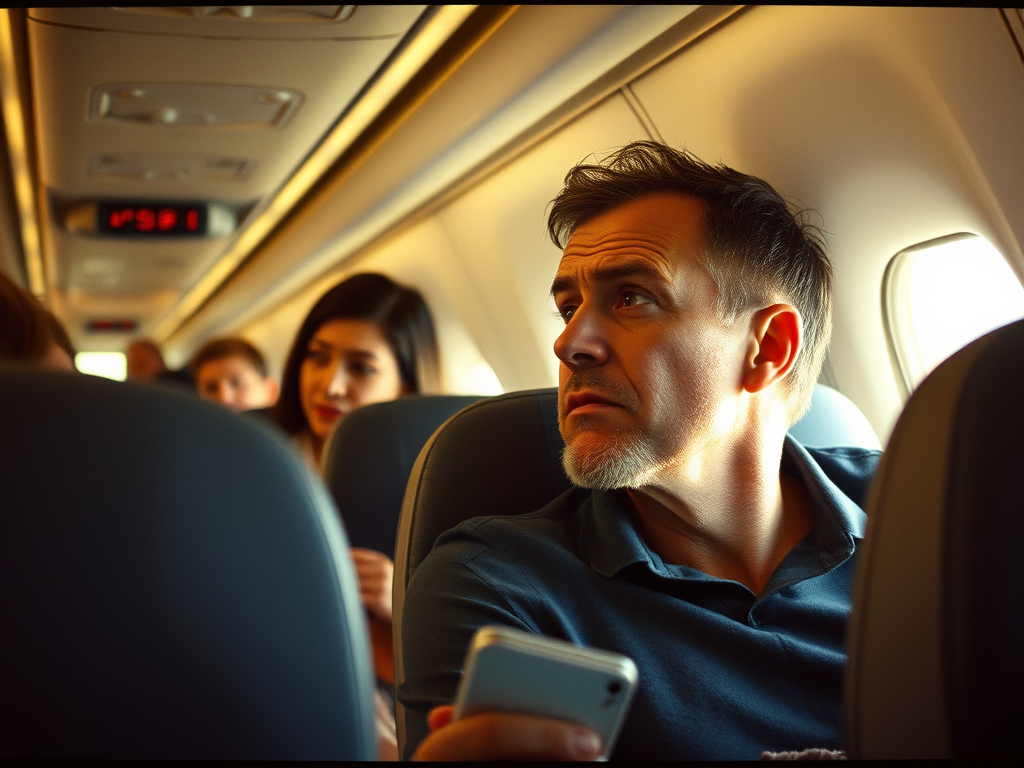
My Inner Battle With Aviophobia
Everything you want is on the other side of fear.— Jack Canfield
02-September-2024 (Laxmi Nagar, New Delhi)
Virgin Atlantic Airways VS- 303 | DEL-LHR | Departure time: 03:30, Arrival time: 08:55 on 03 Sep
I checked my email notifications one last time, and my heart began to race at the thought of my flight scheduled for the following day. Not again, I thought to myself. We were returning to the U.K. after a month-long summer vacation in India. The packing was nearly complete, and I made sure my headphones and Kindle were securely packed in my cabin bag. I was determined to distract myself during takeoff to help overcome my fear of flying. As a final step, I downloaded a Bollywood movie on Netflix. I was ready to face my fear.
03-September-2024 (Terminal-3, International Airport, New Delhi)
The flight was fully booked, and everyone was busy organizing their items in the overhead compartments. I had the window seat, and my wife and son joined me in the adjoining seats. Moments later, the pilot announced that we were ready for take-off. I had my rescue gadgets with me, but then the pivotal moment arrived. The plane was on the runway, the engines roared to life, and the pilot pushed the throttle to full. As the plane ascended, my heart sank; it felt like I was losing control.
I forgot that I had planned to overcome all of this. I looked down from the window and saw the buildings becoming smaller and smaller. I thought that if something were to happen now and the plane fell from the sky, there would be no chance of survival. We would all be doomed. My son chuckled, “Dad, there’s nothing to worry about; you’ll be fine.” I closed my eyes and offered a prayer. It took me fifteen minutes to feel normal again.
Why me, am I abnormal?
It was not the first instance, and probably, it won’t be the last. While searching for an engaging story for Medium, I considered writing about Aviophobia. I was sure that others shared this fear with me, so I decided to conduct research. According to an article published in StratosJet, in 2023, About 25 million people in the U.S. experience some form of anxiety when it comes to flying. I was relieved to know that I was not alone. The next important question was: Why do I fear flying?
Psychological aspects, Past experiences
According to The International Air Transport Association (IATA), air travel is one of the safest modes of transport. During 2019–2023, there was only one accident on every 0.88 million flights. Stats suggest there should be no need to worry.
Still, I can see the following factors contributing to Aviophobia:
- Terrifying flying experiences, such as facing turbulence — A 73-year-old British man died from a suspected heart attack when a flight from London to Singapore hit severe turbulence and dropped more than 50m in four seconds recently. Thankfully, I have not encountered any severe turbulence so far.
- Reading about air accidents in social media or newspapers — On 24 July 2024, a Bombardier CRJ200ER operated by Saurya Airlines crashed shortly after take-off from Tribhuvan International Airport in Kathmandu, Nepal, killing 18 out of 19 people on board. Hearing about these incidents can make anyone feel uncomfortable.
- Watching documentaries like Aircrash Investigation — In 2014, a plane with 239 people aboard vanished from the radar. This docuseries delves into one of our greatest modern mysteries: Flight MH370.
- Feeling claustrophobic up there at 30,000 feet — Claustrophobia is a type of anxiety disorder characterized by an intense and irrational fear of enclosed places. It affects around 12.5% of the world’s population.
I am not afraid of turbulence, nor am I claustrophobic. My fears stem from different sources.
Having excessive subject knowledge can be dangerous at times, and I realized this through my understanding of how many ways a plane can crash. I gained this knowledge by watching every episode of Aircrash Investigation and following the YouTube channel of Mentour Pilot. Despite knowing that air travel is the safest mode of transportation, I’m aware that a plane can crash due to numerous factors, including human error, mechanical failure, sabotage, and natural events.
How does Aviophobia affect life?
The implications of Aviophobia extend well beyond the individual, affecting personal, social, and professional aspects of their life. Aviophobia can significantly impact various aspects of life. Friends and family may make jokes at our expense, leading to feelings of isolation in society.
Severe Aviophobia can lead to a medical condition that may require a doctor’s attention. There are instances when a person may refuse to travel by air, no matter the circumstances. This decision can lead to significant delays, causing them to miss important work meetings or special family gatherings that hold great emotional value.
Tips for overcoming the fear of flying
Although I have not yet successfully overcome my fear of flying, I am still trying to implement various strategies to manage it effectively.
- Distraction (Rule of five): Try to observe five nearby objects. Notice and name them, such as a headphone, pamphlet, cushion, monitor, or boarding pass. Next, focus on the next five items and continue until the plane takes off.
- Deep breathing: Breathing exercises can help with anxiety by calming the nervous system and reducing stress. So, sit comfortably, inhale, hold your breath, and exhale. Repeat till you feel at ease.
- Cognitive behavioural therapy (CBT): As I discussed, air travel is the safest mode of travel. So, read about how planes fly, check the airline safety records, and have trust in the crew. They get the best possible training and know their jobs well. All of the above will help change your perception of flights and aviation.
- Flight tracking apps: This is my favourite method for calming myself down. There are various flight tracking applications like FlightAware, FlightRadar24, and PlaneFinder. I begin tracking the flight a week in advance by noting the take-off time, landing time, detours (if any), in-flight issues, or delays. If the past seven days have been calm and the flight took off and landed without any problems, there is a high chance that my flight will also be safe.
- Avoid overeating and caffeine before a flight, as it puts the central nervous system on high alert, making you more susceptible to anxiety.
Finally
Facing a fear of flying isn’t easy, but each small step forward brings a new sense of freedom and possibility. Remember, it’s okay to take it at your own pace — every journey counts. If you’ve dealt with Aviophobia, you’re not alone. Share your story and support others.
Leave a Reply